COATING COMMANDER — TERMS AND CONDITIONS
Power Requirements
Contractor must have access to electricity, specifically INCLUDING at least ONE (1) 220-amp circuit (dryer/stove outlet) and two (2) 110 outlets. If a 220 outlet is not available, Contractor must have access to TWO (2) additional NON-GFI 110 OUTLETS and TWO (2) additional 110 outlets. Purchaser understands Contractor will likely require access to interior areas of the jobsite; failure to comply with this term will result in the project being cancelled in its entirety or rescheduled, and additional fees will be charged.
Parking & Access
Contractor MUST be allowed to park Towing Unit and Equipment/Product Trailer in the area that has closest access to the job area, which is most often the driveway at the jobsite. If Contractor is NOT allowed to park in this area, Purchaser waives all claims of property damage liability including but not limited to damage caused by equipment or product used by Contractor.
Firm Bid & Pricing
Contractor will provide a firm bid of the total cost of the project before the job is started. This bid proposal will include all labor, materials, sub or specialty contractors, and rental equipment if needed. This price is the full amount due. Purchaser understands and agrees to pay any and all bid payments on or before the date(s) due.
Coating Limitations & Repairs
PURCHASER UNDERSTANDS that the epoxy floor is a coating; repairs made to damaged areas are only to insure proper adhesion of the coating. Prior concrete issues such as uneven floors, waves, pitting, cracking, scaling, or other issues can change the appearance of the coating creating visual “high or low” spots or other issues; these are issues with the original installation or overall quality of the floor and cannot be created or fixed by the coating. If repairs are not charged for, only minimal repairs will be made and only to insure proper adhesion of coating. Significantly damaged floors, verticals, foundation edges, divots, and scaling will have a rough appearance and texture; this is unavoidable and NOT an issue covered under the warranty.
Verticals & Stairs
Areas that cannot be properly prepped including but not limited to stairs (steps), vertical foundation walls, trim boards, and so on are not warranted against damage or failure. Furthermore, Vertical Foundation walls or other vertical areas, including but not limited to steps (wood or concrete) if included in the contract are for decorative purposes only. These surfaces will NOT have the same texture as the horizontal floor surface and most likely be rougher in appearance and texture.
Payment Terms
Upon acceptance of this proposal, a 25% deposit of the total bid amount will be required from the Purchaser. Purchaser agrees to pay the remaining balance of the agreement in full on the day of substantial completion as determined by the Contractor’s job superintendent. If extra travel is necessary to collect the final payment, that time may also be added to the total amount due. It is expressly understood that any warranty work will be done from a mutually created punch list and completed after final payment of the agreement amount. If minor repairs or touch-ups are necessary, they will be scheduled after balance is paid in full and weather permitting. No warranty will be valid until the job is paid in full; if payment is not received within 45 days of completion No Warranty will be issued.
Default & Liens
In the event the Contractor is not paid on the day of substantial completion of the job for any reason, in accordance with the statutes of this state, a LIEN may be filed against the property within five (5) business days. This will include payment defaults due to NSF checks or overdraws. Purchaser is responsible for all fees (including but not limited to interest, legal, or filing fees) and additional expenses incurred by Contractor for collection of any payments owed to Contractor.
Additional Work
Purchaser will pay to the Contractor for any additional work not included in this proposal from a mutually agreed upon Change Order.
Site Preparation
Purchaser is responsible to remove any and all items in and around the working area(s) and keep the area free of people, pets, and personal or household items that could interfere with the Contractor’s crew or the integrity of the area, be it visual or otherwise damaging, for the entire duration of the project. Non-Compliance with this item will result in additional fees.
Property Care
Contractor will take reasonable care in preventing the epoxy coating from getting on any surface not intended to receive epoxy coating. In no event will Contractor be liable for any damages beyond the reasonable cost to return the surface to as close to near original condition as possible. Contractor is not responsible for minimal damage of any property.
Proposal Validity
This contract proposal can be withdrawn if not accepted within 30 days from the date on the reverse.
Breach of Contract
In the event the Purchaser should breach, rescind, or cancel this contract, the deposit herein shall be forfeited to the Contractor as liquidated damages for breach of contract and as special damages for losses incurred by the Contractor. If such breach or rescission occurs after shipment of any materials ordered by the Contractor for this specific job, it being expressly agreed by both the Contractor and the Purchaser it would be extremely difficult, if not impossible to determine the actual damages suffered by the Contractor. Therefore, both agree that Fifty Percent (50%) of the entire contract would be a reasonable amount equated to the probable damage suffered by the Contractor.
Right to Rescind
Purchaser is aware that there is a three (3) day right to rescind period for any reason; unless the contract is accepted within five (5) calendar days of the scheduled installation date. The Purchaser can rescind this contract and be fully reimbursed for all payments made to Contractor unless the contract specifies a customized or otherwise altered color/product from the Contractor’s standard stock selection. Verbal notification must be given to Office and confirmed in writing via US Postal Mail.
Color Variations
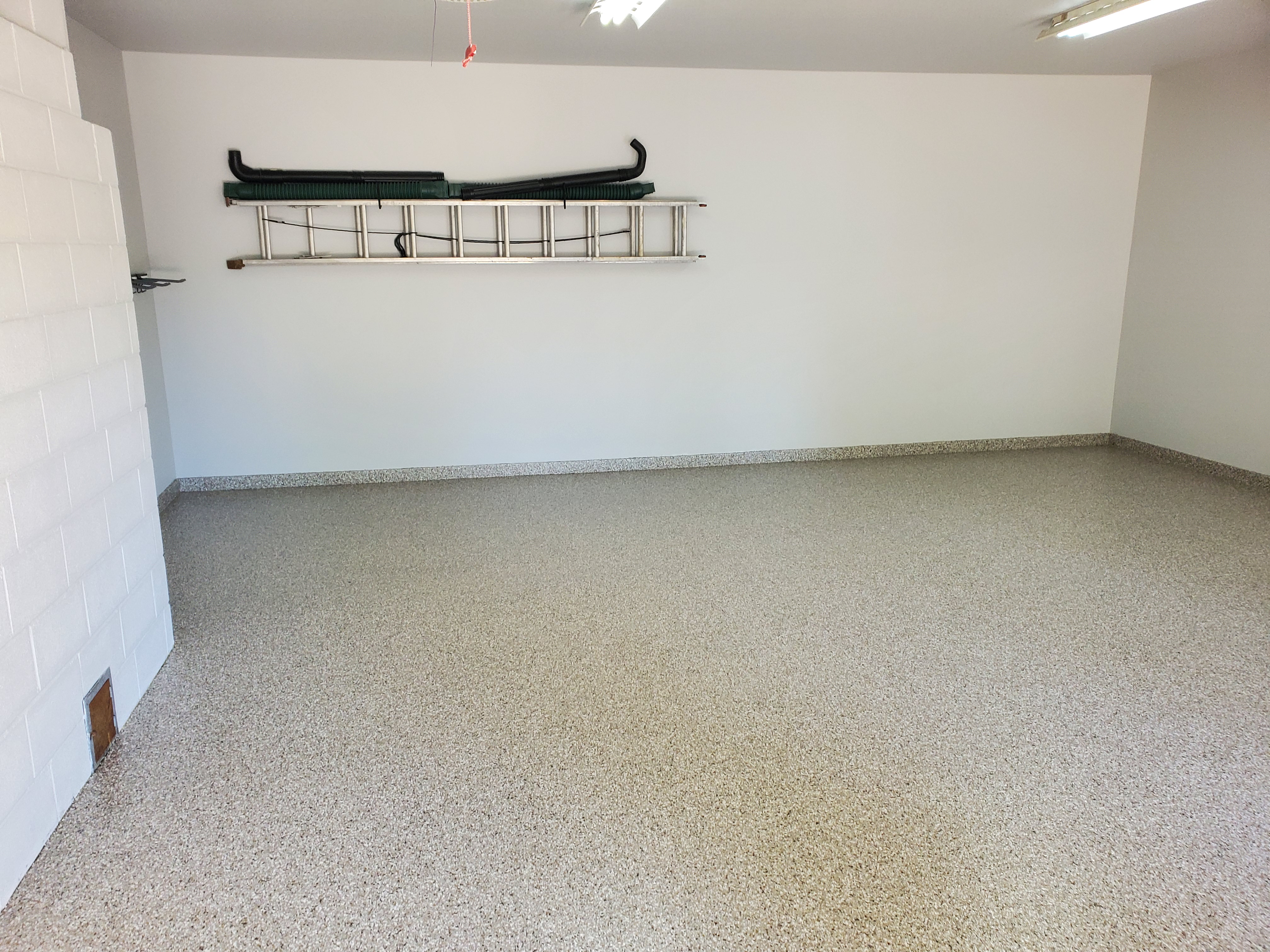
Colors may vary slightly from samples due to dye lots, chip lots, and overall quality of floor. Density of flake pattern may vary.
Warranty Coverage
Coating Commander floor coatings come with a 15-year warranty on the coating materials and workmanship of properly prepped horizontal surfaces. Cracks and Repairs carry a 1-year warranty from date of installation. Warranty includes but is not limited to: tire peel, tire bleed, and delamination due to product failure. What is not covered, including but not limited to: Abuse or Mistreatment, Fire, Acts of God, Movement and Settlement of the concrete, aggressive acceleration or deceleration of vehicles, dirt/debris ground into the top coat in high traffic areas (typically tires) due to failure of properly cleaning area on regular basis. Entries/Approaches are not covered for any issues.
Cure Time Requirements
PURCHASER MUST FOLLOW THESE TIMELINES OR THE WARRANTY IS VOID. Floor Coating System: Surface is not to be walked on for a minimum of 8 hours, no heavy objects for 24 hours, and no vehicle traffic for 24 hours after completion. Unless otherwise specified in writing by Contractor.
Cancellation & Rescheduling
Purchaser agrees to waive any rights to refund of deposit in the event owner chooses to cancel the project if owner does not give Contractor 10 (ten) business days notice. Purchaser also agrees to pay $300 Rescheduling Fee if owner fails to notify Contractor of the need to reschedule project 5 (five) business days prior to the original scheduled start date.
Force Majeure
Sudden and/or unexpected events (including but not limited to weather) may require rescheduling; Purchaser understands should he/she request the rescheduling; fees may be applied and the project will be rescheduled at Contractor’s convenience. The parties understand and agree that the Contractor shall not be liable for delays caused by circumstances beyond their control.
Insurance Certificates
Customers requiring Certificates of Insurance will be assessed an administration fee of $50.00. Certificates of Insurance requiring Additional Insured and/or other endorsements will be charged full cost of endorsements plus 25% for administration fees not already calculated for in preceding estimate.
Cleaning Restrictions
DO NOT USE ANY TYPE OF PRESSURE WASHER OR ANGLED TIP TO CLEAN COATED AREAS. THIS WILL VOID THE WARRANTY.
The parties hereto understand and agree that this contract contains the entire understanding and agreement between them, and that no promises, representations, agreements, warranties or understanding have been made or arrived unless specifically set forth herein, and this contract may not be amended except in writing.